WSOP Story: Pius Heinz Won $8,715,638 — How One Pair Held Up
Pius Heinz’s 2011 World Series of Poker Main Event win is a useful reminder that poker hands are judged at showdown, not by how impressive they look while the cards are being dealt. A big pot can turn on a modest made hand, a missed draw, or a single card that changes who is ahead. But there is an important detail behind this headline: Heinz’s famous victory should not be reduced to the claim that one pair won the final hand. The broader lesson is how to read hand strength, understand the board, and separate a real made hand from a draw or a hopeful high-card holding.
Heinz, a German professional, won the 2011 WSOP Main Event and its $8,715,638 first-place prize. His story still makes a strong teaching example for new players because tournament poker demands more than memorizing which five-card hand ranks highest. Visit this page You also need to track the board, compare both players’ best five cards, and know when your apparent strength is vulnerable.
What “one pair held up” really means
In Texas Hold’em, each player receives two private cards and uses any combination of those cards and the five community cards to make the best five-card hand. “One pair held up” means a player had a pair and remained ahead through the remaining cards, while an opponent failed to improve to a better hand. It does not mean the pair was unbeatable, or that the player was guaranteed to win when the money went in.
That distinction matters in a WSOP Main Event hand. A pair can be ahead of an opponent’s unpaired high cards, but the opponent may have outs: cards that can improve the hand and take the lead. And if a straight or flush draw is possible, a player with one pair must account for those threats. A flush draw is not a straight draw: one Check out this site requires five cards of the same suit, the other five consecutive ranks. They are different ways to improve, with different cards completing them.
One pair vs high card
At showdown, one pair beats high card. For example, if you hold a pair of eights and your opponent has ace-high with no pair, your pair wins—provided neither player makes a better five-card hand using the board. The kicker matters when players share the same pair. If both players have a pair of eights, the highest remaining card, or kicker, can decide the pot.
Quick sanity check: if villain has A-K and you have a pair of eights, you are ahead on a blank board at showdown. But A-K can still improve by pairing an ace or king, and a coordinated board may create additional threats. Being ahead now is not the same as being safe.
Texas Hold’em hand rankings
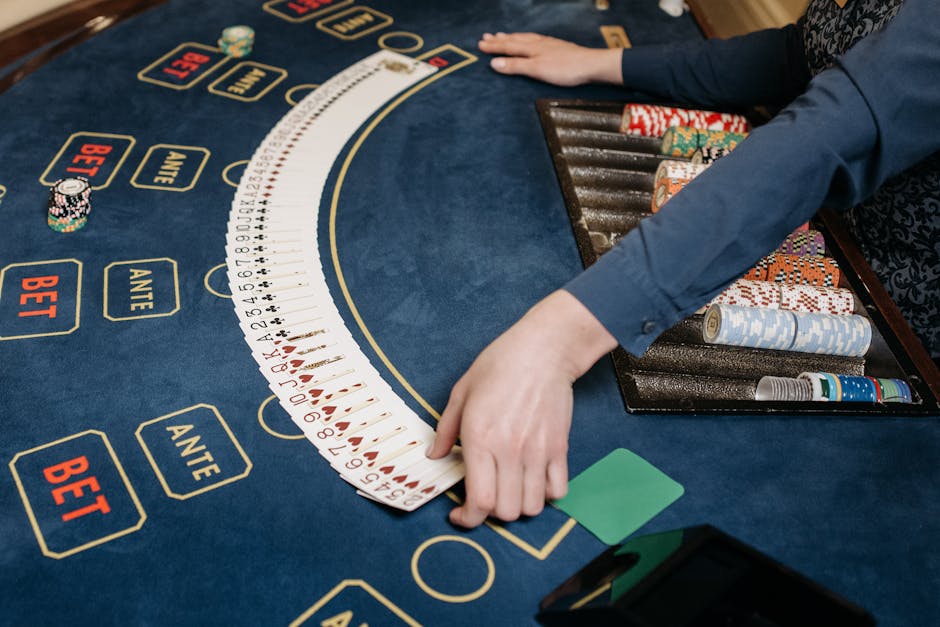
Knowing the rankings helps you avoid a common beginner mistake: focusing on your two private cards while ignoring the best five-card hand available to everyone. From strongest to weakest, standard Texas Hold’em hands are:
- Royal flush: A-K-Q-J-10, all the same suit.
- Straight flush: Five consecutive ranks, all the same suit.
- Four of a kind: Four cards of the same rank.
- Full house: Three of a kind plus a pair.
- Flush: Five cards of the same suit, not in sequence.
- Straight: Five consecutive ranks, not all the same suit.
- Three of a kind: Three cards of the same rank.
- Two pair: Two different pairs.
- One pair: Two cards of the same rank.
- High card: None of the above; the highest card plays.
Suits do not have different strength in standard poker. A spade is not stronger than a heart, and a king-high flush is not beaten by another flush merely because it is a different suit. Compare the ranks making the hands; suits only matter when a hand requires cards of the same suit.
Hand odds and probabilities
Odds give context, not certainty. A hand’s probability depends on how many cards are known, the street, and what you are trying to hit. A familiar example is four of a kind: the probability of being dealt four of a kind in a five-card hand is approximately 0.0240% (1 in 4,164)—also commonly stated as about 1 in 4,165. The tiny difference comes from rounding.
That number describes a specific five-card deal; it is not the probability of making quads in every Hold’em situation. In Texas Hold’em, you see seven total cards by the river, and the chance of making a particular hand changes as the community cards are revealed. Pretty simple.. Always check what the probability refers to: a starting deal, a flop, or a completed hand by the river.
SituationApproximate chanceWhat it means Four of a kind in a five-card hand0.0240% (about 1 in 4,165)A rare completed five-card hand One unseen out on the turnAbout 2.2%One card among 46 unknown cards One unseen out on the riverAbout 2.2%One card among 46 unknown cards after the turn One out across turn and riverAbout 4.3%One chance on the turn or river, not bothThe table’s one-out examples assume a typical situation with 46 unseen cards and no relevant information about an opponent’s cards. In real play, your exact outs may be fewer: a card that appears to help you can also complete an opponent’s stronger hand.
Draw odds by flop, turn, and river
Draw odds help you estimate how often an unfinished hand will improve. A common shortcut is the “rule of four and two”: on the flop, multiply your approximate number of outs by four to estimate your chance of hitting by the river; on the turn, multiply by two to estimate your chance of hitting on the river. It is a quick estimate, not a substitute for exact odds.
Draw exampleTypical outsFlop to riverTurn to river Open-ended straight draw8About 31.5%About 17.4% Flush draw9About 35.0%About 19.6% Two overcards, when both are clean6About 24.1%About 13.0%These figures assume all listed outs are live. An open-ended straight draw usually has eight cards that complete a straight; a flush draw usually has nine cards of that suit remaining. But “usually” is doing work here. If an out gives your opponent a flush, pairs the board in a dangerous way, or makes a higher straight, it may not be clean.
On the flop, a flush draw with nine outs has roughly a 35% chance to complete by the river. On the turn, it has about a 19.6% chance to hit on the last card. Don’t mix those numbers up. The flop-to-river figure includes two chances to improve; the turn-to-river figure includes only one.
How to read a WSOP Main Event hand
Rather than judging a famous pot by the headline alone, walk through the hand in order. This is a useful routine whether you are reviewing a WSOP Main Event hand, playing a home game, or facing a low-stakes online decision.
- Identify the made hand. What is your best five-card hand right now: high card, a pair, or something stronger?
- Read the whole board. Look for possible straights, flushes, and paired-board full houses. Your private cards can be less important than the community cards.
- Estimate the opponent’s range. Ask what hands make sense based on their actions—not just what hand you hope they have.
- Count clean outs. Separate cards that truly improve you from cards that may still leave you behind.
- Compare the price with your chance. Pot odds help decide whether a call is worthwhile. Avoid calling just because you have a draw.
For example, suppose you have a pair and villain has a flush draw. If you are ahead, the draw can still arrive: a typical nine-out flush draw hits by the river about 35% of the time from the flop. If the pot offers a price that makes a call profitable, continuing may be reasonable; if not, folding can be correct even when you currently have the best hand. Poker decisions are about expected value, not proving you were ahead at one moment.
Printable cheat sheets and equity charts
Good study tools make the basics easier to check at the table. Printable cheat sheets can show the hand rankings, common draw outs, and approximate flop-to-river and turn-to-river odds. Keep them simple enough to scan quickly; a page packed with tiny tables is less useful than a clear chart you can read between hands.
Equity charts can help compare a hand against another hand or a range. Equity is your share of the pot on average if the remaining cards were dealt out many times. It is not a promise that you will win this particular pot. A pair may be ahead of high card, but its equity depends on the opponent’s possible draws and the board. Use charts to learn patterns, then review actual hands to understand why the numbers change.
- Use a printable hand-ranking sheet until the order becomes automatic.
- Use a draw-odds chart to distinguish flop-to-river chances from turn-to-river chances.
- Use equity charts to compare specific hands and ranges, not to guess at outcomes.
- Mark the kicker whenever two players can share the same pair or high-card hand.
The lasting lesson from Pius Heinz’s 2011 win
Pius Heinz’s 2011 victory and $8,715,638 prize are part of WSOP history, but the useful takeaway for a new player is practical: learn the rankings, read all five community cards, and know what your opponent can still make. The phrase “one pair held up” captures a familiar poker situation, not a guarantee that a pair will survive every runout—or a precise description of every detail of Heinz’s final hand.
When you review a hand, ask three questions: What is the best five-card hand now? Which cards can change the result? And does the pot offer the right price to continue? If villain has A-K and you have a pair of eights on a blank board, your pair is ahead at that moment—but the kicker becomes important if both players make a pair, and future cards can change the winner. That careful distinction between current strength and final outcome is how you turn a dramatic WSOP story into better decisions at your own table.. Of course, your situation might be different